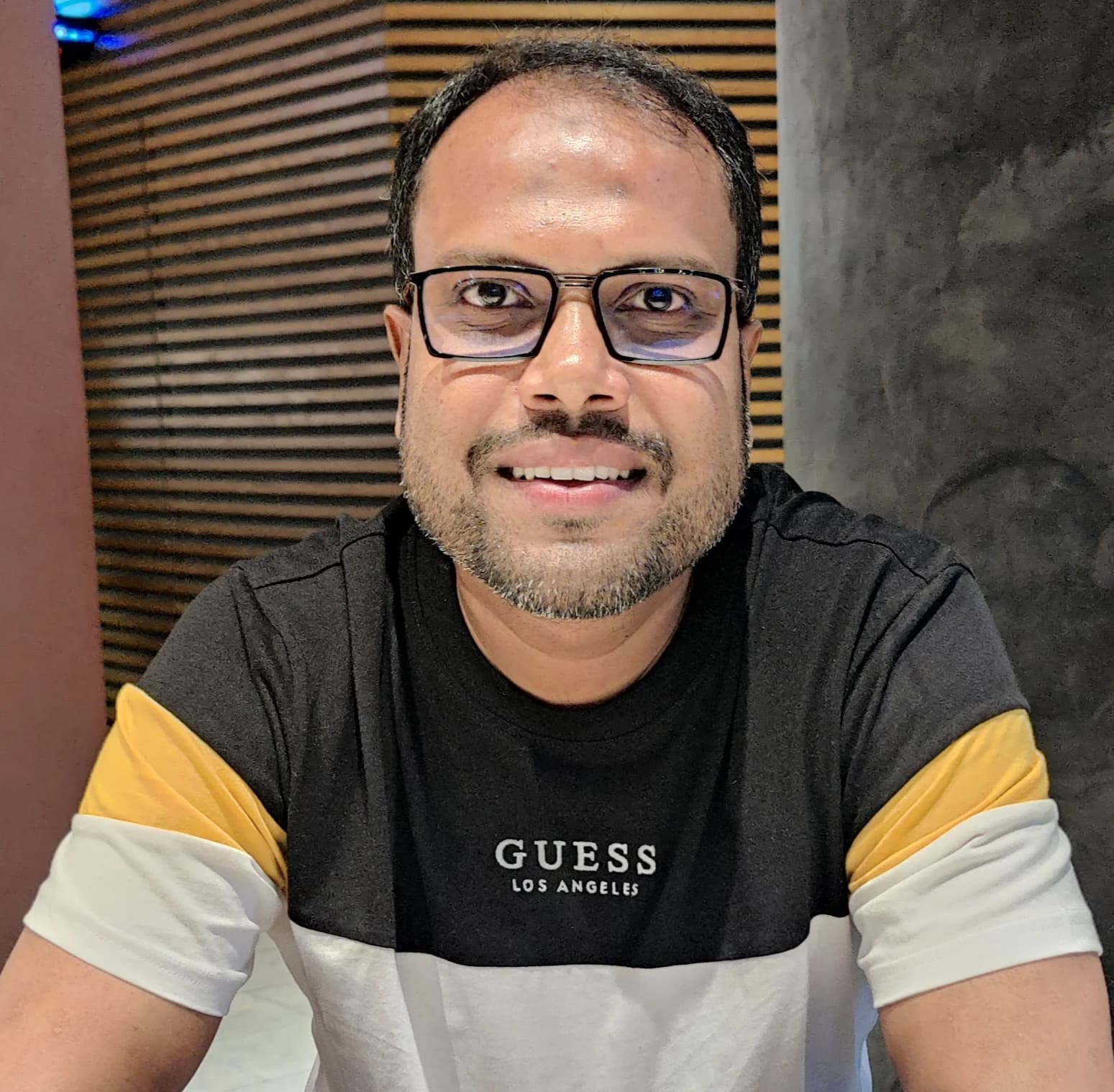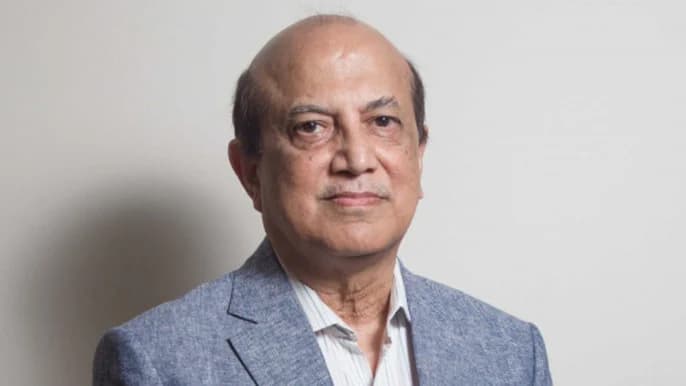
— Dr. Ahmed Mushtaque Raza Chowdhury: Academician, Institution Builder and Implementation Expert
“I repeatedly asked myself a simple question: Where would my work matter most? Each time, the answer was Bangladesh. This country was not a constraint; it was my intellectual laboratory, my responsibility, and my source of credibility.”
Published: 18 March, 2026
Mushtaque Chowdhury: Looking back across five decades, I see my journey as an attempt to institutionalize compassion through evidence. If I close my eyes and travel back, I do not first see conferences or publications. I see a riverbank in rural Bangladesh. I see bamboo being unloaded to rebuild homes burned during the Liberation War. I see young field workers arguing passionately about how to improve a program with almost no resources. I see mothers desperately looking for opportunities to send their kids to school. That is where my journey truly began.
I began my professional life in post-1971 Bangladesh, where development was not theoretical. Villages had been burned. Infrastructure was shattered. Women lacked rights. Poverty was structural and visible. In those early years, development was not a career choice but, to me, a moral necessity.
Over time, I received opportunities to spend extended periods abroad. Some were professionally attractive and materially comfortable. Yet I repeatedly asked myself a simple question: Where would my work matter most? Each time, the answer was Bangladesh. This country was not a constraint; it was my intellectual laboratory, my responsibility, and my source of credibility. Remaining rooted here allowed me to engage globally with authenticity rather than abstraction.
“যে তোমায় ছাড়ে ছাড়ুক, আমি তোমায় ছাড়ব না মা!
আমি তোমার চরণ--
মা গো, আমি তোমার চরণ করব শরণ, আর কারো ধার ধারব না মা॥“
(To relinquish you isn’t my choice ever, whosoever may do, O’ mother, your feet are my only recourse, O’ what else for should I bother). – Rabindranath Tagore; translator anonymous.
When I joined BRAC in 1977, I was a young statistician with more confidence in regression models than in rural conversations. My first assignment was to assess a vegetable cultivation program. Sitting on mud floors, listening to farmers describe crop failures and credit burdens, I quickly realized that survey tools alone could not capture lived realities. Numbers needed narrative.
One of my earliest and most formative engagements was the Oral Therapy Extension Program (OTEP), through which BRAC trained over 12 million mothers across rural Bangladesh in the preparation and use of oral rehydration therapy (ORT). I visited villages where mothers demonstrated, with confidence, how to mix salt, sugar, and water correctly. It was profoundly moving to see scientific knowledge become household practice. Scores of studies were conducted to refine delivery and safety. That experience reinforced a lifelong lesson: simple solutions, when scaled systematically, can transform a nation’s health trajectory.
As Founding Director of BRAC’s Research and Evaluation Division (RED), I worked to institutionalize rigorous monitoring and mixed-methods research across programs including health, education, microfinance, extreme/ultra poverty, gender, and environment. We conducted baseline surveys in places like Manikganj, introduced competency assessments in education, and built an internal culture where programs were continuously refined based on evidence rather than assumption or whims.
I have always been deeply committed to publishing. Research that remains unpublished rarely influences policy. Whether through peer-reviewed journals, books, monographs, or national reports, I have believed that evidence must enter public discourse. In 2013, I co-led a landmark series in The Lancet on what came to be known as the “Bangladesh Paradox.” The series demonstrated how Bangladesh achieved remarkable gains in child survival, immunization, fertility reduction, and life expectancy despite modest income levels and persistent inequalities. It was deeply gratifying to see Bangladesh discussed not as a symbol of deprivation, but as a case of resilience and innovation. That moment was not about personal recognition; it was about restoring dignity to a nation often misrepresented internationally.
Beyond Bangladesh, my work has engaged global debates on universal health coverage (UHC), health systems strengthening, and implementation science. As Senior Adviser at the Rockefeller Foundation (2009–2012), I worked across South and Southeast Asia, including Bangladesh, Thailand and Vietnam, on health reform and financing strategies. Thailand’s progress toward UHC demonstrated that middle-income countries can make bold equity commitments when political will and technical rigor converge. Yet even during those international engagements, Bangladesh remained my anchor. The lessons I carried to global platforms were grounded in lived experience at home.
If I were to summarize these decades, I would say they have been about building institutions that endure, promoting accountability through data, and ensuring that development enhances dignity rather than dependency.
Mushtaque Chowdhury: BRAC shaped my professional identity and my ethical compass. I remember monthly meetings in modest bamboo-walled halls in Sulla, where field workers debated program challenges late into the evening. There was no hierarchy in those discussions, only a shared commitment to solving problems.
Under the leadership of Sir Fazle Hasan Abed, BRAC combined compassion with discipline and ambition with humility. He trusted young professionals with responsibility. That trust shaped my confidence and my sense of obligation.
Over four decades, I witnessed BRAC evolve from a post-war rehabilitation initiative into a global organization operating across Asia and Africa. Along the way, BRAC pioneered microfinance at scale, community health worker networks, non-formal education, the graduation approach for ultra-poor families, and social enterprises such as BRAC Bank and bKash, which today serve tens of millions.
For me, BRAC represents three enduring principles:
1) Scale with rigor: “Small is beautiful, but large is necessary.”
2) Integrity over expediency: choosing principle over convenience.
3) Learning organization ethos: field → evidence → correction → scale.
BRAC demonstrated that institutions from Bangladesh and other resource-poor countries can influence global conversations without abandoning their roots.
Mushtaque Chowdhury: Founding the James P. Grant School of Public Health in 2004 was exhilarating and deeply personal. We wanted to create a school that would produce reflective practitioners, not detached technocrats. I personally accompanied students to rural placements in Savar and urban settlements such as Korail. Watching them confront sanitation gaps, maternal health challenges, and urban vulnerabilities reaffirmed my belief that public health must be experienced before it is theorized.
Bangladesh Health Watch, launched in 2006, emerged from a similar conviction: progress must be independently monitored. Inspired by Education Watch (which we began in 1998), we produced annual evidence-based reports examining equity, governance, human resources for health, and UHC. I recall the first public launch, where policymakers, civil society leaders, and researchers sat together debating findings. Evidence became a shared language rather than a contested weapon.
These initiatives were never about personal ownership. They were about creating platforms where ideas could outlast individuals.
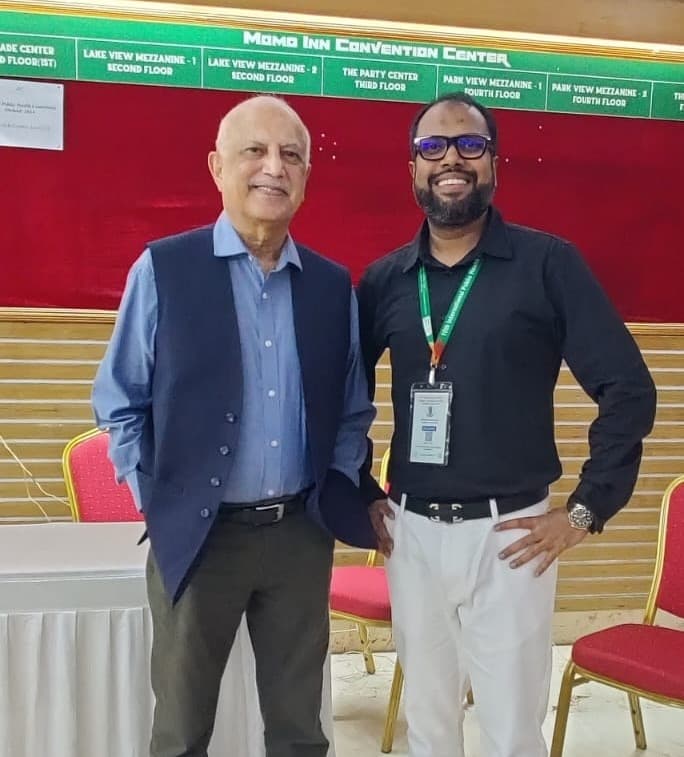
Interviewer shares a memory with the interviewee
Mushtaque Chowdhury: At the London School of Hygiene and Tropical Medicine, following earlier studies at the London School of Economics and Dhaka University, I learned intellectual discipline. My supervisor Professor Patrick Vaughan made immense impact on my career and its progression.
My doctoral research revealed that communities interpret illness categories differently from biomedical textbooks. That discovery humbled me. It taught me that cultural understanding must accompany statistical precision.
Later, as a MacArthur Fellow at Harvard’s Center for Population and Development Studies, I experienced the value of interdisciplinary thinking and reflective solitude. At Columbia University, mentoring students from across continents continues to nourish me. When a student from Africa or Latin America draws parallels with Bangladesh’s experience, I am reminded that ideas travel when rooted in authenticity.
Mushtaque Chowdhury: I see them as a continuum. My affiliation with Columbia University allows me to translate field experiences into scholarship. My time at the Rockefeller Foundation taught me how global policy change requires strategic convening.
Yet throughout, I chose to remain based in Bangladesh. That decision ensured that my global engagements were informed by current realities rather than distant memory.
Field lessons informed policy advocacy. Academic debates sharpened program design. Institution building created platforms for future leaders.
Mushtaque Chowdhury: The development sector today faces volatility, geopolitical tension, climate change, and pandemics. Yet opportunities for global collaboration have never been greater.
For young Bangladeshis:
• Develop strong analytical skills.
• Remain grounded in community realities.
• Publish rigorously.
• Protect your integrity.
• Cultivate patience.
You do not need to permanently relocate to make a global contribution. Depth at home often creates credibility abroad. Global influence increasingly grows from authentic local engagement.
Mushtaque Chowdhury: I am a reader and writer at heart. I value quiet reflection, conversations with family and friends, and mentoring discussions with younger colleagues. Seeing former students grow into leaders gives me immense satisfaction.
Mushtaque Chowdhury: Sir Fazle Hasan Abed remains a towering influence. His moral clarity and trust in people shaped not only institutions but individuals like me.
Mushtaque Chowdhury: I am completing a memoir reflecting on optimism—how ideas emerging from a small, resource-constrained country can influence global development thinking.
Mushtaque Chowdhury: Build what will outlast you. Remain curious. Remain humble. And stay anchored where your work has meaning.
Mushtaque Chowdhury: I began my career in a fragile, newly independent Bangladesh. I have worked in villages and in global forums, in bamboo halls and international foundations. The geography changed; the purpose did not.
Remaining in Bangladesh was not an act of restraint. It was a conscious choice. It allowed me to speak globally with lived experience and credibility. It kept my work grounded in reality.
Optimism, I have learned, is not naive. It is disciplined. It requires evidence, integrity, and perseverance. If the institutions I helped build continue to nurture inquiry, strengthen accountability, and expand human dignity, then the journey has been worthwhile.
Interview conducted by Monaemul Islam Sizear
Dr. Mushtaque Raza Chowdhury is a Bangladeshi researcher, academician, and institution builder with over five decades of experience in development and global health. He served as Founding Director of BRAC's Research and Evaluation Division (RED), later as Executive Director and Vice Chair of BRAC. He founded the James P. Grant School of Public Health and helped establish Education Watch and Bangladesh Health Watch. A Professor of Clinical Population and Family Health at Columbia University and former Senior Adviser at the Rockefeller Foundation, he has contributed to global debates on universal health coverage, health systems strengthening, and educational assessments. He was honored by The Lancet for his contributions to global health and has received numerous awards including the "Medical Excellence" award from the Ronald McDonald House Charities and "Innovator of the Year" award from Brigham Young University. His work integrates rigorous evidence, institutional integrity, and deep rootedness in Bangladesh, demonstrating how locally grounded leadership can shape global development discourse.